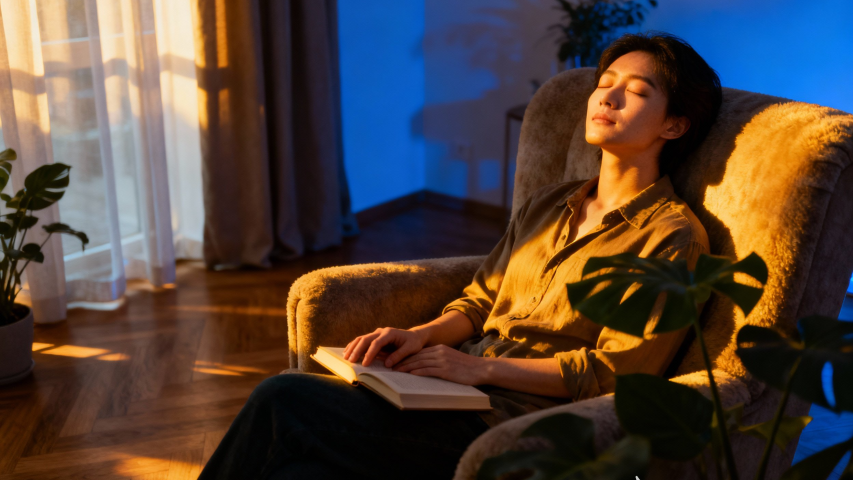
Have you ever felt calm in a cozy café but restless in a bright office? That’s not a coincidence. Lighting directly affects how we feel, think, and function every day.
Light is more than something that helps us see. It controls how our body releases hormones, when we feel sleepy or alert, and how our mood changes throughout the day. Studies show that lighting has a strong effect on our circadian rhythm, the internal clock that tells us when to wake up or rest. When this rhythm is disrupted by poor lighting, it can lead to stress, fatigue, and sleep problems.
Research shows that well-designed lighting improves focus, mood, and productivity. A recent meta-analysis found that people in spaces with balanced lighting report better well-being and mental clarity. Offices that use human-centric lighting, which adjusts brightness and color temperature based on the time of day, have lower stress levels and better sleep outcomes for workers.
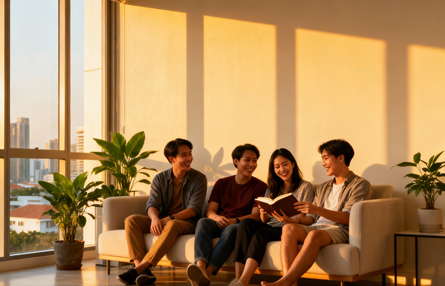
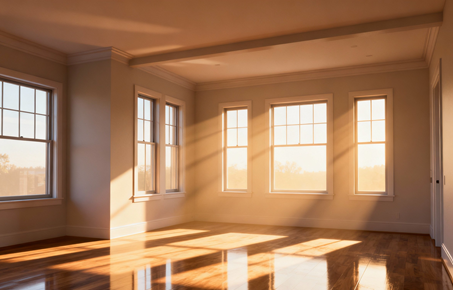
Natural light plays an equally powerful role. People who live or work in spaces with good daylight exposure feel happier and more energized. A study published in Building and Environment found that daylight access directly improves satisfaction and lowers the risk of depressive symptoms. In Singapore, where many people spend long hours indoors, good daylight design is essential for mental health.
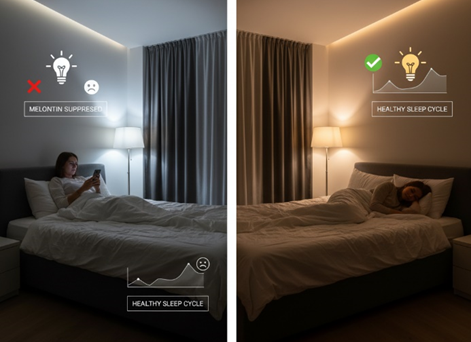
Too much artificial light, especially at night, can do the opposite. Exposure to bright light before bedtime can suppress melatonin, the hormone that helps you sleep. A study with over 87,000 people found that too much night lighting increased the risk of depression by 30 percent, while more daytime light reduced it by 20 percent. The key is balance: bright during the day, warm and dim at night.
How to Apply Lighting Science for Well-Being
Design for natural light first. Plan window positions to let daylight in without glare.
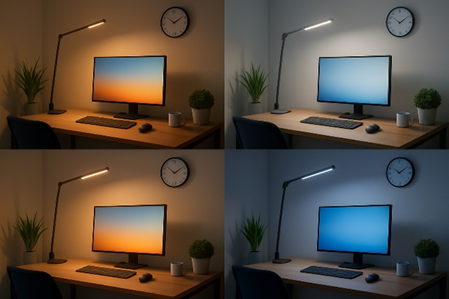
Use adjustable LED lights. Change brightness and color temperature throughout the day.
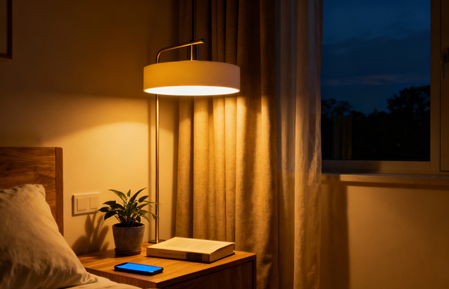
Avoid blue light at night. Switch to warmer tones like 2700K after sunset.
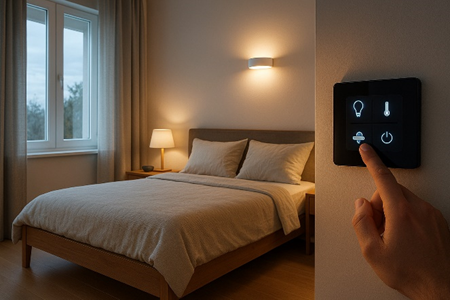
Add smart controls. Automate lights to follow the natural rhythm of day and night.
Follow safety and energy standards. In Singapore, lighting must meet NEA and CPSO regulations for efficiency and product safety.
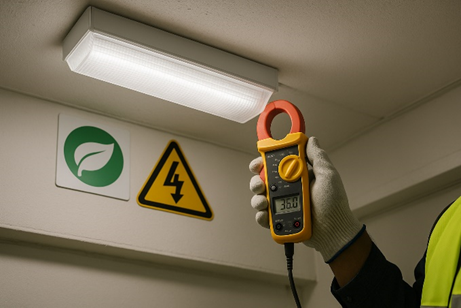
Good lighting is not just about visibility. It’s about comfort, focus, and health. When used correctly, light can boost your mood, improve your sleep, and even make your home or workplace feel more alive.
Let’s Talk
Have you ever noticed how lighting affects your mood or sleep? Maybe you felt relaxed in a softly lit space or restless under harsh white light. Share your experience below. The more we talk about how lighting affects well-being, the better we can design spaces that help people feel good.
References
- Energy Market Authority (EMA). Singapore Energy Statistics 2025. Data on household electricity consumption. https://www.ema.gov.sg
- National Environment Agency (NEA). Mandatory Energy Labelling Scheme (MELS) and Minimum Energy Performance Standards (MEPS) for lamps. https://www.nea.gov.sg
- Consumer Product Safety Office (CPSO), Enterprise Singapore. Safety Mark and Consumer Protection (Safety Requirements) Regulations. https://www.consumerproductsafety.gov.sg
- Harvard Health. Blue Light Has a Dark Side. https://www.health.harvard.edu/staying-healthy/blue-light-has-a-dark-side
- SpringerLink. Meta-analysis on lighting and human well-being. https://link.springer.com/article/10.1007/s10902-024-00838-4
- PubMed Central. Impact of dynamic LED lighting on stress and sleep. https://pmc.ncbi.nlm.nih.gov/articles/PMC7579128
- ScienceDirect. Daylight exposure and human satisfaction study. https://www.sciencedirect.com/science/article/pii/S0360132322005509
- Medical Xpress. Impact of light exposure on mental health. https://medicalxpress.com/news/2023-10-largest-exposure-impact-mental-health.html